Escape from Backrooms - Horror
- 3.5
- Rating
- 500.00K
- Installs
- Free
- Price
 Analysis by App-foxy
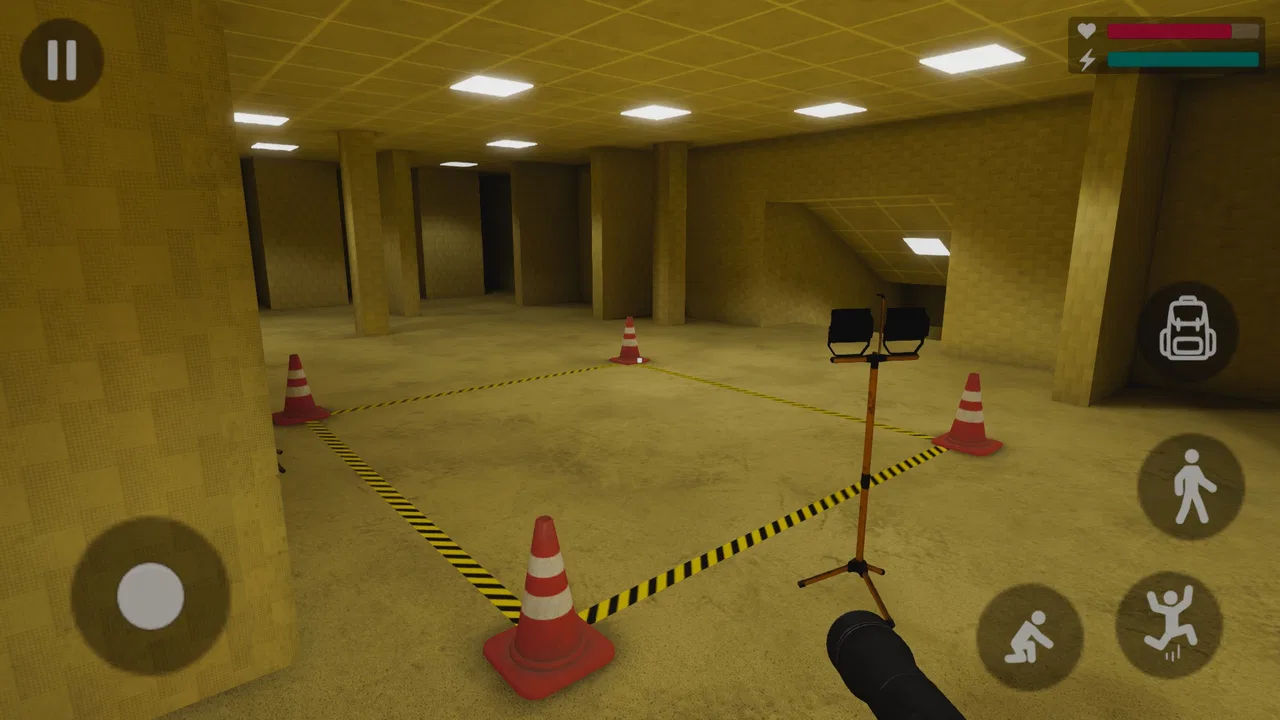
Escape from Backrooms - Horror is the kind of adventure game I open when I want a short burst of tension rather than a relaxed gaming session. Its basic idea is easy to understand: move through unsettling labyrinths, look for a way out, and stay alert for traps. What makes the experience work is the pressure created by uncertainty. Even when the controls are simple, I am constantly deciding whether to move quickly, pause to read the environment, or risk checking another passage.
Developed by RedboxSoft, this free game is aimed at players who enjoy horror built around exploration and escape. It is available for Android devices running Android 6.0 or later, carries a Teen content rating, and currently sits at version 3.5. The game has passed 500 thousand installs, with an average rating of 3.5 from around 1.6 thousand ratings. That combination tells me it has found a real audience, while also suggesting that the experience will not suit everyone equally.
I would not describe it as a deep story-driven adventure. Its appeal is more immediate: the atmosphere, the maze-like movement, and the feeling that a wrong turn can turn a simple search into a stressful escape attempt. If you like games where learning the environment matters more than collecting equipment or building a character, this is worth considering. If you need a detailed narrative, polished cinematic presentation, or a highly varied progression system, you may find it limited.
You May Also Like

 Blood Strike: 2.5 Anniversary
Blood Strike’s Loadouts Turn Every Drop Into a Tactical Gamble
A close look at Blood Strike’s custom loadouts: how fast access to signature weapons reshapes its battle royale rhythm, rewards preparation, and narrows the gap between fights.

 Pandora - Music & Podcasts
Pandora’s Music Is Easy to Start, but Harder to Recover
Pandora’s strength is its low-effort path from a seed to a station. Its weak spot is how much confidence it asks you to place in connection, setup, and quiet recovery.

 8 Ball Pool
 Is Built on Rivalries, Rematches, and Routine
A close look at the rivalries, rematches, shared routines, and unanswered safety questions that turn a quick pool match into a persistent mobile community.

 Samsung Music
’s Quiet Strength Is Playing What You Already Own
Its reach comes less from spectacle than from dependable access to a personal library. That simplicity is both the app’s strongest retention engine and its ceiling.

 AccuWeather: Weather Radar
AccuWeather Review: A Quick, Clear Forecast for Everyday Decisions
For everyday plans, the best forecast is the one you can understand quickly. AccuWeather makes rain timing, radar, and local conditions easy to act on, with a few trade-offs.

 Hill Climb Racing
Why Hill Climb Racing Still Turns Crashes Into One More Run
A tiny car, a bumpy hill and one more upgrade: Hill Climb Racing keeps resurfacing because its simple chaos makes every near-miss feel personal.
More From Our News Desk
View All News


How I approach each labyrinth
I approach each labyrinth as a navigation problem first and a horror challenge second: I note a landmark, keep track of the way back, and change only one habit after a failed attempt. That gives me useful feedback instead of turning every run into hurried guesswork. Next, I look at what this method can—and cannot—solve once the routes start feeling familiar.
A simple baseline workflow works better than rushing
My first instinct in a Backrooms-style game is usually to run forward and hope the exit appears. That is also the quickest way to lose control of a situation. I get better results by treating each section as a small navigation problem. I first identify the route I am currently following, notice obvious visual markers, and then decide whether I am exploring a new branch or returning through familiar space.
This habit matters because maze games can make several areas look almost identical. When every wall, corridor, or room has a similar mood, memory becomes more useful than speed. I try to remember a distinctive corner, a change in lighting, or the direction of a passage rather than relying on a vague feeling that I have been there before. That reduces the number of pointless loops and gives me a clearer idea of where I should search next.
I also avoid treating every sound or visual change as a reason to panic. Horror works best when I remain observant, and rushing makes me miss the details that could help with navigation. A slower first pass gives me a mental map. Later attempts become faster because I am no longer reacting to the entire environment as if it were unknown.
What I do when a trap interrupts the route
Traps are the main reason I keep a little distance between exploration and impatience. I do not assume that a clear-looking path is automatically safe. When the environment feels suspicious, I move in smaller stages and watch what changes after each step. This is especially useful when a route seems designed to pull me forward quickly.
A practical routine is to pause before entering a new area, look for the safest visible continuation, and keep track of the direction I came from. That last part is easy to ignore, but it is important. If a trap forces me to retreat, I want to know which turn leads back to a recognizable location instead of making several random choices under pressure.
I find that the game rewards calm repetition more than heroic improvisation. A failed attempt is useful when I can identify the decision that caused it. If I simply sprint through the same route again, I repeat the same mistake. If I change one behavior—such as checking a corner before committing to a corridor—I gradually make the escape more reliable.
A realistic everyday play session
For me, this is a convenient game for a short evening session. Imagine having ten or fifteen minutes free while waiting for an appointment or winding down before bed. I can start an attempt, explore until I reach a difficult section, and stop without needing to manage a large inventory or remember a complicated story. The tension is immediate, so the game does not require a long warm-up.
That same design can be a drawback if you prefer games that let you relax. The atmosphere keeps my attention focused, and repeated failures can become tiring when I am already mentally drained. I would choose it for a quick horror challenge, not as background entertainment while watching something else.
Settings are worth checking before judging the controls
Before settling into a serious attempt, I recommend checking the available in-game settings instead of assuming the default arrangement is ideal. In a mobile horror game, small control adjustments can affect how comfortable it feels to turn, inspect a passage, and react to danger. I pay attention to sensitivity and button placement first, because awkward movement creates frustration that has nothing to do with the maze itself.
I also check audio-related options before playing in a public place or late at night. Sound contributes strongly to the mood, but it is not always practical to play with the volume high. Lowering it may make the game less immersive, while headphones can make sudden cues feel much more intense. I prefer to choose a level that lets me notice the environment without making every attempt unpleasant.
Screen brightness is another small but useful consideration. A display that is too dim can hide visual differences between passages, while excessive brightness can weaken the horror atmosphere. I adjust the phone display and the game view together, then test the result in a quiet section rather than changing settings in the middle of a tense escape.
Because the current version is 3.5, I would still begin with a quick control check after installing or updating. Even when the core interaction feels familiar, a player should know how movement, looking, and any on-screen actions respond before entering a difficult area. This is not a hidden advantage or an exploit; it is simply a way to avoid losing an attempt because a button was misunderstood.
Shortcuts are habits, not magic solutions
The most useful shortcuts I have developed are mental ones. I use the same order every time: orient myself, identify the likely route, scan for danger, and only then commit to movement. This sequence sounds basic, but it prevents the common mobile-gaming mistake of touching the screen repeatedly because I feel rushed.
I also keep my phone in a position that allows both movement and quick visual checks. If my hand covers too much of the display, I lose information at exactly the wrong moment. A stable grip is more valuable here than frantic tapping. When I am playing for longer, I take a brief pause between attempts so that I do not carry the tension of one failure into the next run.
Another effective pattern is to separate discovery from execution. During an early attempt, I accept slower progress and focus on learning the layout. Once I recognize the route, I switch to a more deliberate pace and avoid unnecessary detours. This two-stage approach is faster overall than trying to complete the game perfectly on the first exploration.
How I compare it with other mobile adventure games
Compared with story-heavy adventure games, Escape from Backrooms - Horror is much more focused on immediate navigation and atmosphere. There is less reason to expect long conversations, elaborate character development, or a broad world filled with side activities. Its strength is that I can understand the objective quickly and start playing without studying a large set of systems.
Compared with traditional maze games, the horror presentation changes the way I make decisions. A normal maze encourages efficiency and route memorization. Here, the same process is interrupted by tension, traps, and the possibility that I have misunderstood what is safe. That makes familiar paths feel different from a simple puzzle solution, although players who dislike pressure may prefer a calmer maze title.
It also differs from action-oriented horror games that give the player many tools for fighting back. The appeal here is not a large arsenal or a powerful character build. I approach it as an escape challenge, where awareness and movement matter more than collecting upgrades. That makes it accessible, but it can feel sparse if you want constant combat or a strong sense of progression.
Where experienced play reaches its limits
After I have learned the broad rhythm of a section, I pay attention to whether another attempt is teaching me anything new or simply repeating a mastered route. That distinction helps me decide when to keep practicing and when the game’s focused structure has reached its limit for me. The next section considers that trade-off for experienced players.
Repetition helps, but it can also expose the narrow design
Repeated attempts are central to the experience. I learn from mistakes, recognize patterns, and gradually become less vulnerable to the same trap. That loop is satisfying when each run teaches me something. However, repetition can lose its appeal if I already understand a section and still have to pass through it in much the same way before reaching a more challenging area.
This is the main limitation I would explain to a friend before recommending it. The game provides a focused horror scenario rather than an endlessly expanding adventure. Its value comes from mastering the escape process, not from expecting a huge amount of new content every time I play. Players who enjoy perfecting routes may appreciate that focus; players who need constant novelty may become bored sooner.
Why I would not play it on every phone
The minimum operating-system requirement is Android 6.0, so compatibility reaches back to older Android versions. That is helpful for players with devices that are not running the newest software. Still, operating-system compatibility does not guarantee that every phone will feel equally comfortable. Screen size, touch response, display brightness, and general performance can all affect a game built around movement through dark environments.
I would test the controls in a safe area before deciding whether the phone is suitable for longer sessions. If turning feels imprecise or the display makes the surroundings difficult to read, the game may feel unfair even when the problem is really the device setup. A larger screen can make visual orientation easier, while a compact phone may be more convenient to hold but less forgiving when several controls compete for space.
I would also skip this game if I am looking for a completely quiet experience. Even without discussing exact sound behavior, the horror mood depends on paying attention to what is happening around me. Someone who prefers silent, low-pressure puzzle play will probably be happier with a conventional maze game or a slower exploration title.
Who should choose it, and who should look elsewhere
I think it is a good match for players who enjoy short horror sessions, maze exploration, and learning through repeated attempts. It is especially suitable if you like the feeling of being vulnerable and solving a route with observation rather than relying on a large collection of abilities. The free price also makes it easy to try without committing money first.
I would be more cautious about recommending it to players who want a rich story, friendly accessibility options, competitive multiplayer, or a long-term character progression system. The Teen rating also makes it a better fit for older players and families who are comfortable with horror themes. It is not the game I would hand to someone seeking a cheerful adventure or a gentle introduction to mobile gaming.
The rating of 3.5 shows a mixed but meaningful response from its audience. I read that as a reason to set expectations carefully rather than as an automatic warning. The game clearly offers enough atmosphere and challenge to attract a substantial player base, but its focused structure and possible repetition will divide people. My own view is similar: I enjoy the tension when I approach it as a compact escape game, but I would not pretend it replaces a larger horror adventure.
My repeatable method for improving at it
When I want to improve, I use a simple three-pass method. The first pass is for orientation: I move carefully and identify landmarks. The second is for confirmation: I test the route while paying closer attention to traps and dead ends. The third is for execution: I follow the route with fewer pauses, but I keep the same safety checks at points where I previously failed.
I avoid changing too many things at once. If I alter the control sensitivity, change my grip, rush through a familiar section, and take a different route in the same attempt, I cannot tell what actually helped. Making one adjustment at a time turns failure into useful feedback. This is a small but important difference between playing repeatedly and genuinely learning the game.
Another advanced habit is knowing when to stop. If I have failed several times because I am rushing, continuing immediately usually makes the problem worse. A short break resets my attention, and the next attempt often feels easier because I am observing again instead of reacting emotionally. That matters more in a tense labyrinth than it would in a casual arcade game.
My final recommendation
Escape from Backrooms - Horror is a focused Android adventure for players who want to escape unsettling labyrinths while dealing with traps and uncertainty. RedboxSoft keeps the premise direct, and the free entry point makes experimentation straightforward. I like that I can understand the goal immediately, build better routes through practice, and fit a session into a small amount of spare time.
At the same time, I would not oversell its scope. The experience depends heavily on atmosphere, navigation, and repetition, so its appeal is strongest when those are exactly the things I want. It is less convincing as a replacement for a narrative horror game, a combat-focused title, or a broad adventure with many systems to explore.
My verdict is cautiously positive: try it if you enjoy mobile horror that rewards patience, route memory, and careful movement. Check the controls and sound settings before committing to longer sessions, and treat early failures as map-learning exercises rather than wasted attempts. If you approach it with that mindset, the game can deliver a compact, tense escape challenge. If you need variety, story depth, or a relaxed pace, choosing a different adventure game will probably give you more satisfaction.
FAQs for Escape from Backrooms - Horror
01What is the main objective of Escape from Backrooms - Horror?
Escape from Backrooms - Horror is a survival horror game where players must navigate through eerie and maze-like environments to escape. The main objective is to find clues, solve puzzles, and avoid lurking dangers to make your way out of the backrooms. It’s a test of wit and nerves.
02Is Escape from Backrooms - Horror suitable for all ages?
The game is rated for mature audiences due to its intense horror themes, including jump scares and suspenseful scenarios. It is not recommended for children or individuals sensitive to horror content. Parental guidance is advised for younger players interested in experiencing the game.
03What platforms is Escape from Backrooms - Horror available on?
Escape from Backrooms - Horror is available for both Android and iOS platforms. Users can download it from the respective app stores. Ensure your device meets the minimum system requirements for optimal performance and a smoother gaming experience.
04Does the game require an internet connection to play?
No, Escape from Backrooms - Horror does not require a constant internet connection to play. However, an internet connection may be needed for initial download, updates, or accessing certain online features. This makes it convenient for offline gaming during travel or in areas with limited connectivity.
05Are there in-app purchases in Escape from Backrooms - Horror?
Yes, the game includes in-app purchases that allow players to buy items, hints, or unlock additional content. These purchases enhance gameplay but are not essential for completing the game. Be mindful of purchase options, especially if children have access to your device.
Pros
- Immersive horror atmosphere with detailed graphics.
- Challenging puzzles that enhance gameplay.
- Simple controls for easy navigation.
- Multiplayer mode for shared experiences.
- Regular updates with new content.
Cons
- Some levels can be repetitive.
- Occasional lag in multiplayer sessions.
- Limited customization options.
- Soundtrack can become monotonous.
- Requires a stable internet connection.

Escape from Backrooms - Horror
Gallery